ISWAP’s acknowledgement of commander’s death highlights gains by troops, cracks within insurgent ranks
By: Zagazola Makama
Fresh intelligence indicating that the Islamic State West Africa Province (ISWAP) has internally acknowledged the death of one of its senior commanders killed by Nigerian troops has provided a rare insight into the impact of recent military operations in the North-East.
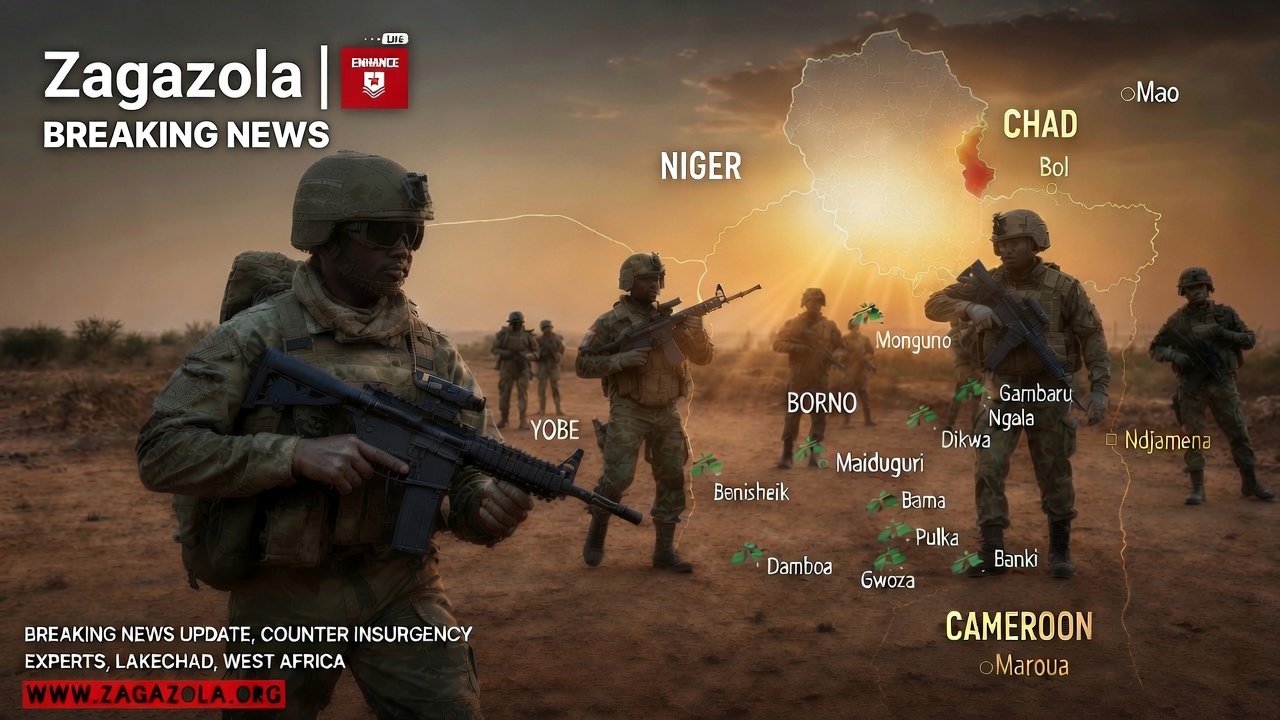
The insurgent commander, identified as Modu Kundiri, served as the Qa’id (camp commander) of ISWAP’s Pulka axis in Gwoza Local Government Area of Borno State, a strategic location close to the border with Adamawa State and the Sambisa Forest corridor.
Intelligence sources told Zagazola Makama that Kundiri was neutralised during recent military operation along the Madagali–Gwoza axis, an area that has remained a critical operational corridor for insurgent movements between Borno and Adamawa.
What makes the development particularly significant is that the confirmation of his death did not come through official propaganda channels of the insurgent group but through intercepted communications among ISWAP members themselves.
According to intelligence obtained on March 11, a conversation between an insurgent identified as Abubakar, who was using Kundiri’s GSM line from a location opposite Pulka Market, and an associate named Fatima in Gonidamgari area of Maiduguri, revealed that the commander had been killed by military troops during the operation. Such internal acknowledgements often provide a clearer picture of battlefield realities than propaganda statements, which insurgent groups frequently manipulate to project strength.
Before his death, Kundiri was reportedly involved in coordinating or participating in several attacks across multiple local government areas in Borno and Adamawa states. These included operations in Gwoza, Askira/Uba, Bama and Konduga LGAs in Borno State, as well as Madagali LGA in Adamawa State.
Security sources say his operational reach across several LGAs reflected his familiarity with the terrain and his ability to coordinate movements along the rugged border areas linking Sambisa Forest to northern Adamawa.
His influence within the insurgent hierarchy had recently increased after he was reportedly elevated to senior command by Mallam Ba’ana Chingori, a prominent ISWAP figure believed to be operating within the Sambisa Forest enclave and Timbuktu Triangle.
The appointment placed Kundiri in charge of coordinating insurgent activities in the Pulka axis, an area frequently targeted by troops because of its strategic importance to insurgent logistics and movement.
The loss of such a commander could temporarily disrupt ISWAP’s operational coordination in the southern Borno corridor.
Field commanders like Kundiri typically serve as the link between strategic leadership in forest enclaves and operational cells responsible for attacks, recruitment and logistics.
“When such commanders are eliminated, it often creates a short-term vacuum in the command structure,” a counter-insurgency analyst said. However, insurgent organisations often attempt to quickly fill these gaps to maintain continuity.
Evidence of such attempts may already be emerging. Intelligence sources noted that the GSM line previously used by Kundiri is now being operated by another ISWAP member. This could be an attempt by the group to conceal the commander’s death temporarily or maintain communication channels within the network to avoid operational disruption.
Such tactics are common among insurgent groups trying to prevent panic or confusion among fighters following the loss of key leaders.