
“It Is Obvious the Video Is Fake” Gov. Mutfwang Dismisses Viral Plateau Burial Attack Video as Fake, Warns Against Rumour-Mongering
By Zagazola Makama
Governor Caleb Mutfwang has dismissed the viral video circulated by Plateau- based activist Masara Kim Usman alleging a “jihadist attack” during a burial ceremony in Barkin Ladi, describing the footage as fake and deliberately designed to cause panic.
The governor made the remarks during a recent Security Council meeting while addressing the growing security issues and the spread of unverified security reports and sensational narratives on social media concerning the security situation in Plateau State.
“It is obvious that the video is fake,” Mutfwang said while reacting to the controversial footage that had been widely circulated online and featured in international interviews.
The video had claimed that armed Fulani attackers stormed a burial ground during funeral rites, allegedly opening fire on mourners from surrounding hills with sophisticated weapons.
However, The Nigerian Police Force who provided security at the scene of the burial and other relevant security agencies in the state found no confirmed casualty, injury or medical record linked to the alleged attack.
The governor’s comments came barely two days after he cautioned social media activists, media, bloggers and online champions against spreading rumours and unverified reports capable of inflaming tensions and damaging the image of the state.
“We are not saying that every incident should be swept under the carpet. We keep accurate data of all accounts of incidents,” the governor said.
“We are not saying that there is no attacks but many of you that are in the hurry to put it on social media, you are destroying the state.”
He warned that the reckless dissemination of rumours and unverified information could endanger lives and worsen the fragile security atmosphere in affected communities.
“And sometimes you put on social media what you heard as a rumour. You dont know the lives you put in danger sometimes with what you put on social media. We need to be careful,” he added.
Mutfwang further alleged that there were deliberate efforts by certain actors to portray Plateau negatively before the international community through exaggerated and misleading narratives.
“There is a deliberate plan to demarket Plateau State and to tell the world that Plateau state is not anywhere that anyone should visit,” the governor said.
“But let me reassure Nigerians and the world that Plateau State remain the home of peace and tourism nobody will take that from us.”said the Governor.
According to the activist’s dramatic narration, heavily armed “Fulani jihadists” surrounded a burial ground, opened fire from nearby hills with sophisticated rifles and sniper weapons, and forced terrified mourners to flee while abandoning corpses in shallow graves.
The scene was presented to international audiences as evidence of an ongoing Islamic terrorist extermination campaign against Christians in Plateau State and Nigeria.
Yet after all the cinematic shouting, breathless commentary and social media outrage, one stubborn problem refused to disappear:
Nobody died, nobody was injured, no hospital treated victims, no corpse emerged from the supposed attack, no security report confirmed casualties, no family identified anybody allegedly shot during the incident. Which raises a very uncomfortable question for the propagandists:
What exactly were the “snipers” shooting at?
Because for an alleged coordinated jihadist ambush involving sophisticated weapons against a crowded funeral gathering, the complete absence of casualties is not merely suspicious, it is devastating to the credibility of the entire narrative.
Even more remarkable was the extraordinary professionalism displayed by the supposed victim while “escaping.” Apparently, modern sniper attacks now allow enough time for stable camera angles, American accents and commentary while maintaining uninterrupted narration and carefully managed video framing.
At different points, the narrator claimed he ran two kilometres. Later, it became five kilometres. He was we was in the middle of God knows where when houses were clearly seeing behind him.
Yet somehow throughout the entire footage, there was no exhaustion, no panic, no disorientation, no visible trauma and not even the shaky breathing expected from somebody allegedly escaping death under sustained gunfire. He even took his time to mount his microphone to avoid background noises.
One almost expected background music and movie credits to appear. But perhaps the most embarrassing part of the production was hidden in plain sight inside the video itself.
While viewers were being told that heavily armed jihadists were actively attacking mourners, some women in the background were calmly walking around without panic. Others appeared unconcerned while some youths suddenly being prompted to run during portions of the recording.
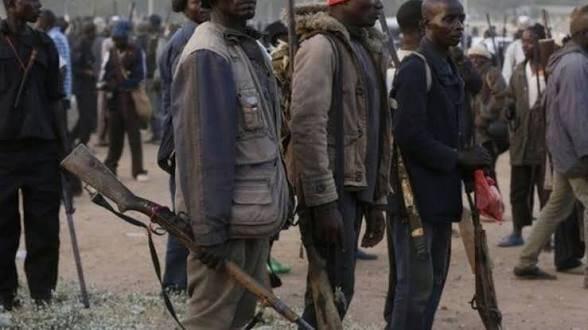
Ironically, the only visible armed individuals in sections of the footage were local armed Berom youths. That small detail completely shattered the carefully packaged “helpless civilians under jihadist siege” narrative being exported to foreign audiences.
Governor Mutfwang’s intervention therefore matters because it represents something increasingly rare in today’s toxic information environment: An admission that propaganda itself has become part of Plateau’s security problem.
The Plateau crisis is already painful enough without staged documentaries pretending to be genocide evidence.
If peace is ever to return fully to Plateau, it will require honesty from all sides not scripted panic, selective outrage and propaganda disguised as activism.
Because eventually, reality catches up. And when even the governor says, “It is obvious that the video is fake,” the performance begins to collapse under its own weight.