Niger: Junta blames Macron after mutiny as security challenges persist
By Zagazola Makama
Niger’s military authorities have blamed France and other foreign interests for the recent mutiny at a military base in Niamey, while questions continue to mount over the cohesion of the country’s armed forces and the worsening security situation.
The Conseil National pour la Sauvegarde de la Patrie (CNSP), which seized power in July 2023, made the accusations following a Council of Ministers meeting on Sept. 4, describing the soldiers involved in the mutiny as “traitors and renegades” allegedly manipulated to serve a foreign agenda.
The junta specifically accused former French President Emmanuel Macron of being behind what it described as an attempt to destabilise the regime.
However, the authorities have not publicly provided detailed evidence establishing a direct link between Macron, the mutineers and the events at the base.
The mutiny, which occurred on Aug. 28 and 29 around Base 101 in Niamey, represents one of the most serious internal challenges faced by the military authorities since they took power.
Presidential Guard takes centre stage
One of the most significant elements of the government’s statement was its description of the Presidential Guard as the “spearhead” of the defence and security forces that responded to the crisis.
The emphasis on the Presidential Guard has raised questions over its increasingly prominent role in protecting the military government.
Under a conventional military structure, the national armed forces are primarily responsible for defending the country’s territory, while a presidential guard is principally tasked with protecting the head of state and key state institutions.
The decision to publicly highlight the Presidential Guard as the leading force in the response has therefore fuelled debate over the relationship between the guard and the wider Nigerien Armed Forces.
It also comes amid reports of tensions and distrust within the military following the mutiny.
Russia’s growing role
The crisis has also highlighted Niger’s deepening military relationship with Russia.
Russian-linked Africa Corps personnel have been reported to operate from Base 101 and have been associated with efforts to support the authorities during the recent crisis.
The cooperation is presented by Niamey as a sovereign partnership aimed at strengthening Niger’s ability to fight armed groups and defend its territory.
Critics, however, argue that the reliance on foreign military personnel sits uneasily with the junta’s longstanding rhetoric against foreign interference and its emphasis on national sovereignty.
Security situation remains fragile
While the authorities focus on alleged foreign involvement in the mutiny, armed groups continue to pose a serious threat in western Niger.
Fresh attacks were reported in parts of the Tillabéri region in early September, including Darbani, Diamballa, Namarigoungou and Zibane.
The incidents reportedly resulted in deaths and injuries, while livestock were also taken during the attacks.
At Diamballa, two young girls reportedly drowned while fleeing during the attack, while a man was wounded. Another man was reportedly killed at Namarigoungou.
The attacks underline the continuing vulnerability of rural communities in Tillabéri, one of Niger’s most volatile regions and an area bordering Mali and Burkina Faso.
Questions over the army’s cohesion
Beyond the accusations against France, the mutiny has exposed deeper questions about the cohesion of Niger’s security forces.
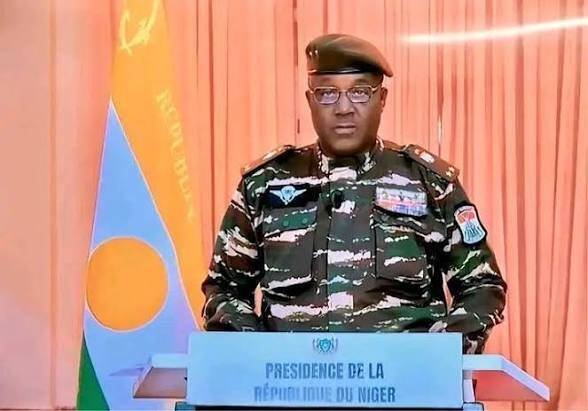
The central challenge for Gen. Abdourahamane Tiani is now to maintain control of the military while ensuring that the armed forces remain capable of confronting jihadist groups operating across large parts of the country.
The crisis has also generated concerns over possible purges, changes in command structures and the growing reliance on forces considered loyal to the leadership.
Any prolonged deterioration in trust between the political leadership and the regular armed forces could further complicate Niger’s counter-insurgency campaign.
Government invokes religious mobilisation
The authorities have also called on religious leaders to strengthen prayers against what they describe as imperialist powers and their African allies.
The move has attracted criticism from opponents of the junta, who argue that religious mobilisation cannot substitute for effective military planning, equipment, leadership and institutional cohesion.
For now, the Nigerien government continues to portray the mutiny primarily as a foreign-backed destabilisation attempt.
But the simultaneous persistence of jihadist attacks and internal tensions within the security establishment suggests that Niger’s security crisis is more complex than a confrontation with external powers.
The events of late August have therefore placed renewed attention on the strength of the Nigerien military, the expanding role of the Presidential Guard and the country’s growing dependence on Russian security assistance.
For communities in Tillabéri and other conflict-affected areas, however, the immediate concern remains unchanged: the continuing threat posed by armed groups and the ability of the state to protect civilians and secure its territory.