Nigeria’s ISWAP Leader, Ba’a Shuwa Reluctant to Accept New ISIS Appointment After Mainok’s Death in Nigeria-US Strike
By: Zagazola Makama
Fresh intelligence reports indicate that a senior Islamic State West Africa Province (ISWAP) commander, Ba’a Shuwa, has shown reluctance to accept a leadership role reportedly proposed by the Islamic State's central leadership in Iraq following the death of veteran commander Abubakar Mainok, also known as Abu Bilal al-Mainuki or Abbor Mainok.
Sources told Zagazola Makama that the move came after Mainok was reportedly killed during a joint Nigeria-United States counterterrorism operation in the Lake Chad Region Basin Area (LCRBA), dealing a major blow to ISWAP's command and propaganda structure.
According to the sources, ISIS central command in Iraq moved swiftly to address the leadership vacuum created by Mainok's death and discreetly reached out to influential figures within ISWAP's hierarchy, with Ba’a Shuwa emerging as one of the preferred candidates to assume a broader leadership role.
However, intelligence assessments suggest that the commander has been hesitant to accept the responsibility.
"The leadership position was reportedly hinted to Ba’a Shuwa by ISIS central command in Iraq following the elimination of Mainok. However, available intelligence indicates that he is reluctant to take up the role at this time," a
source familiar with the development said.
The source noted that the reluctance was believed to stem from the increasing vulnerability of senior terrorist leaders to intelligence-led operations and precision strikes, particularly in the Lake Chad region where military pressure has intensified in recent months.
It is believed that Mainok's death created one of the most significant leadership crises within ISWAP in recent years.
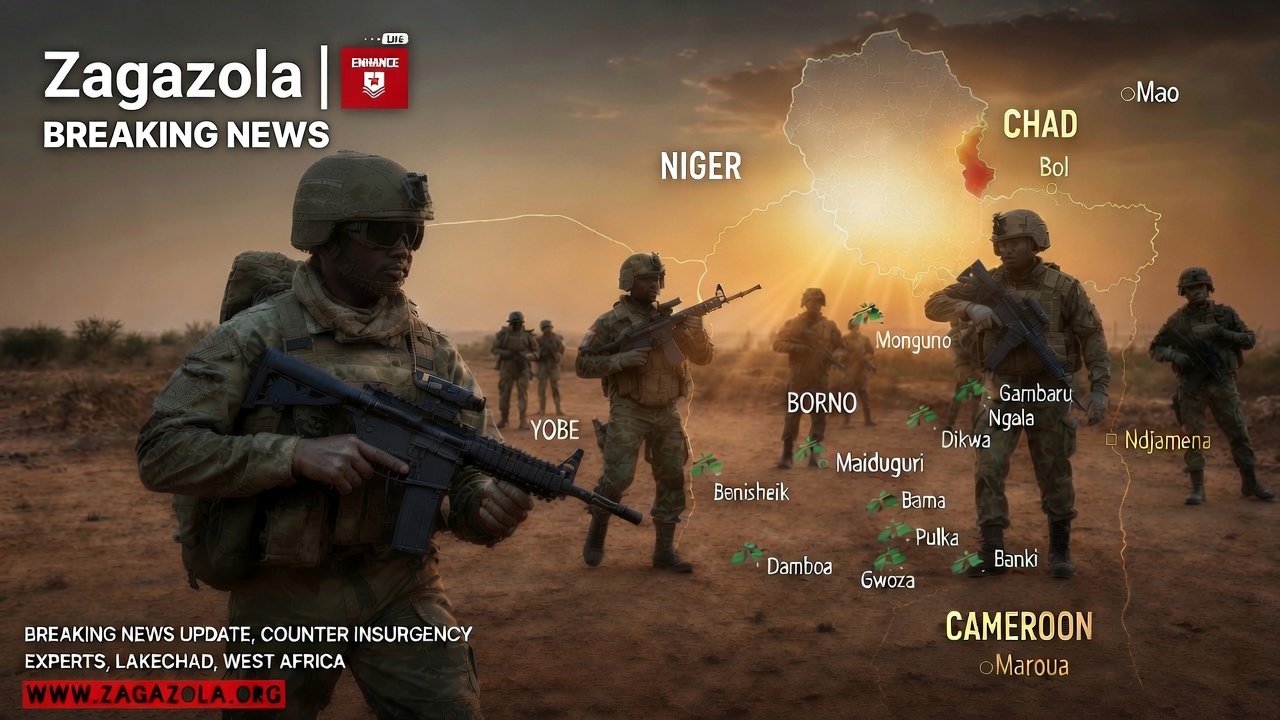
The slain commander was widely regarded as a key strategic figure within the terrorist organisation, coordinating insurgent activities across Nigeria, Niger, Chad and Cameroon while maintaining links with the wider Islamic State network.
His influence reportedly extended beyond military operations to media, propaganda and international coordination.
On May 28, ISWAP itself acknowledged Mainok's death in a statement circulated through its official media channels, an unusual admission that analysts described as evidence of the significance of the loss.
ISWAP alleged that US forces had tracked al-MAINUKI for roughly six months using drone surveillance before launching a multi-point airborne assault.
The group’s statement included rhetorical language framing the operation as disproportionate, noting “what prompted crusader America to cross all these distances” for a single individual. The communique was released about two weeks after the operation, following Eid-el-Kabir.
The group claimed that a newly established media facility in the Lake Chad forests had been targeted during the operation, resulting in the deaths of Mainok, members of its ILANI media network, several foreign ISIS fighters and other associates.
The media unit is the ISIS al-FURQAN and the subset for media coverage is the ILANI network situated in the LCRBA. However, the group after the US/NIGERIA strikes have sustained terrorists campaigns via AMAQ and al-NABA magazines.
Security analysts say the statement represented the first known public acknowledgment by ISWAP that a senior leader had been killed during an operation involving direct U.S. participation in the region.
While ISWAP did not provide a total casualty figure, Open-source intelligence assessments have estimated that up to 175 fighters may have been killed during the operation. The affected locations included Garin Abu Bilal (also known as Sahel), Garin Ba Bunu (west of Mangari), Satir-Kanama and Kwatan Fulani.
Sources further disclosed that ISIS central command had been concerned about preserving continuity within ISWAP's leadership structure, particularly after the loss of several influential figures over the past months. It is believed a debate has ensued to where the al-FURQAN HQ should be established
The effort to persuade Ba’a Shuwa to assume a higher leadership position was therefore viewed as part of a broader attempt to stabilise the group's command system and reassure fighters operating across the Lake Chad basin.
However, intelligence reports indicate that the proposal has not generated the expected enthusiasm within the organisation.
"There are indications of internal disagreements regarding succession and the future direction of the organisation. The apparent reluctance of Ba’a Shuwa to step into the role has added to the uncertainty," another source said.
The development is also believed to have fuelled tensions among competing factions and commanders within the group, with some fighters reportedly relocating from traditional strongholds in the Lake Chad axis amid concerns about sustained military operations.
"The issue is not merely replacing a commander. Mainok occupied a unique position that combined operational authority, media oversight, ideological influence and links to ISIS central leadership. Such individuals are difficult to replace," said sources.
The sources added that the situation could further weaken coordination among ISWAP cells operating across the Lake Chad basin and adjoining border regions.
Despite the apparent leadership challenges, ISWAP remains a capable and dangerous terrorist organisation with the ability to adapt and reorganise.