How 17 Brigade’s medical services are winning hearts in Katsina communities, as military provides free support to 2,500 patients
By Zagazola Makama
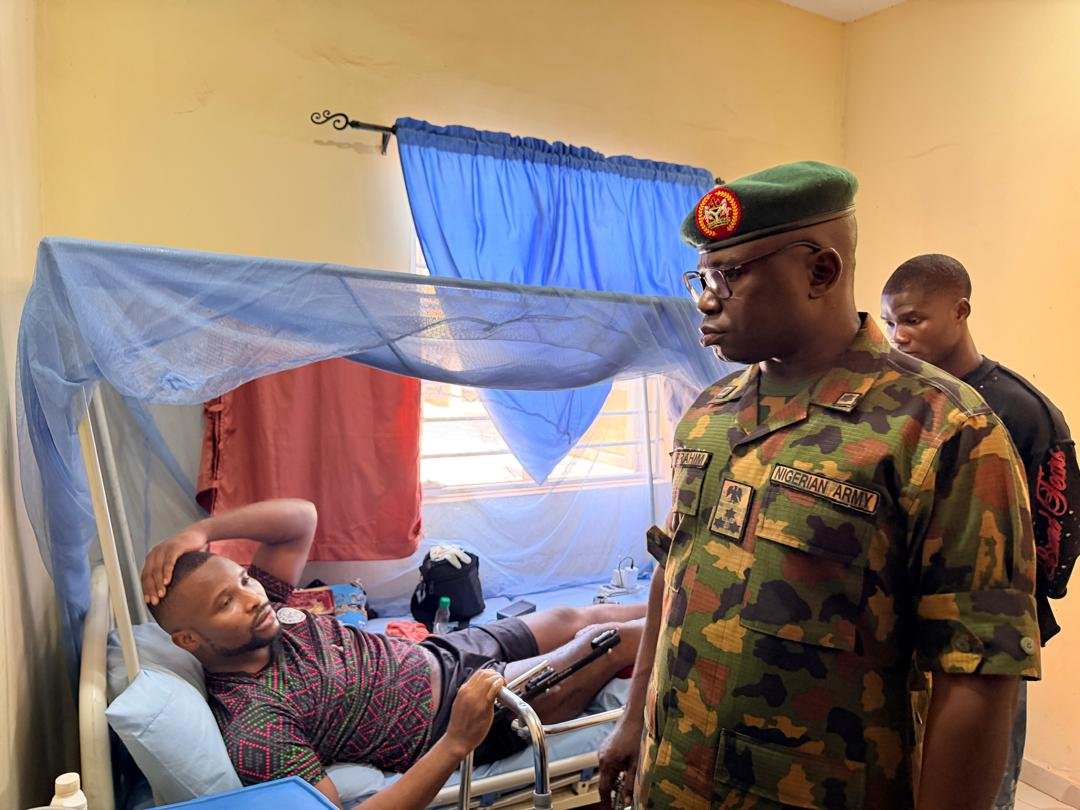
The 17 Brigade Nigerian Army Medical Centre in Katsina has emerged as a critical pillar of the Nigerian Army’s civil-military cooperation strategy, providing free healthcare services to thousands of soldiers, their families and residents of surrounding communities, while strengthening public confidence in the military through accessible and quality medical care.
The facility, which was recently toured by a delegation of Defence Correspondents as part of an assessment of the brigade’s non-kinetic operations, showcased the Army’s growing investment in community healthcare, specialist medical services and humanitarian interventions aimed at complementing kinetic operations against banditry and other security threats in Katsina State.
Leading journalists through the hospital, the Acting Commanding Officer of the 17 Brigade Medical Centre, Captain Kehinde Olakunle Ajose, said the medical facility has evolved far beyond its original mandate, transforming from a primary healthcare centre into a comprehensive medical institution awaiting accreditation by the National Health Insurance Authority (NHIA) to operate as a secondary healthcare facility.
According to him, the centre now delivers a broad spectrum of specialist medical services at no cost to patients, reflecting the Nigerian Army’s commitment to improving the welfare of both its personnel and host communities.
“Basically, this is a primary healthcare centre. However, we recently completed an upgrade and have been assessed by the NHIA. We are now awaiting full accreditation to operate as a secondary healthcare facility,” Ajose said.
He explained that despite its current status, the hospital already functions like a secondary health institution, offering specialist consultations, surgical procedures, laboratory investigations, diagnostic imaging and emergency medical care.
He disclosed that the facility enjoys the support of consultants from the Federal Teaching Hospital, Katsina, who regularly conduct specialist clinics in Ear, Nose and Throat (ENT), Obstetrics and Gynaecology, General Surgery, Radiology, Optometry and Paediatrics.
“We have consultants from the Federal Teaching Hospital who come here regularly to attend to patients. Virtually ten specialist departments have already been established and assessed,” he said.
Ajose noted that the hospital currently has between 60 and 65 personnel, comprising military medical staff, civilian employees and members of the National Youth Service Corps (NYSC), all working together to provide uninterrupted healthcare services.
One of the major attractions of the medical centre is its policy of providing completely free healthcare services.
According to Ajose, consultations, medications, laboratory investigations, surgeries and emergency treatments are offered without charge to military personnel, their dependants and residents of neighbouring communities.
“Everything we do here is free. From consultation to medications, laboratory services and surgeries, patients are not required to pay. The hospital serves both our personnel and members of our host communities,” he said.
He revealed that the facility receives between 2,500 and 2,800 patients every month, underscoring the confidence communities have developed in the hospital.
“Last month alone we attended to about 2,800 patients. Even in previous months, we have consistently recorded not less than 2,500 patients.”
The acting commanding officer said records of all patients treated are compiled monthly and forwarded to higher military authorities for monitoring and evaluation.
Ajose disclosed that one of the most significant achievements recorded by the hospital is its growing capacity to perform surgical procedures that previously required referrals.
Since becoming operational in September last year, the medical centre has successfully conducted nearly 40 surgical operations, including emergency surgeries involving civilians.
“For cases requiring special attention, we stabilise the patient, carry out surgery where necessary and transfer them to the general ward for post-operative care. Since September last year, we have carried out almost 40 successful surgeries.”
He recalled a recent emergency involving a civilian who was rushed into the hospital on a Sunday. “We immediately contacted one of our consultants, performed the surgery and the patient is doing very well.”
For highly specialised procedures beyond the hospital’s current capacity, Ajose said the facility maintains an effective referral relationship with the Federal Teaching Hospital, Katsina.
“Whenever there are cases beyond the equipment available here, we refer them immediately. The consultants are always available, even at odd hours.”
The acting commanding officer also showcased the hospital’s diagnostic facilities, including fully functional ultrasound and X-ray equipment.
According to him, the availability of modern diagnostic equipment has drastically reduced the financial burden on patients who previously had to travel to private facilities for imaging investigations.
“All our machines are functional. The availability of ultrasound and X-ray services has greatly reduced the cost patients incur because we no longer refer them elsewhere.”
Where specialist interpretation becomes necessary, Ajose explained that radiologists attached to the Federal Teaching Hospital provide professional reporting of diagnostic results.
The Defence Correspondents also toured the hospital’s dental unit where military dental officers demonstrated the range of oral healthcare services available. The unit currently provides teeth restoration, scaling and polishing, preventive dental care, sterilisation procedures and routine oral examinations.
Medical personnel explained that emphasis is placed on preventive dentistry through early diagnosis and regular oral hygiene education.
“We focus more on prevention because preventing dental diseases is better than treating complications later.”
The hospital has equally established a modern Ear, Nose and Throat (ENT) department equipped with an audiometry suite and soundproof testing room.
The facility enables specialists to assess hearing sensitivity, diagnose hearing impairments and determine patients requiring hearing aids or surgical intervention.
Hospital officials disclosed that at least three successful ENT surgeries have already been carried out since the department commenced operations.Although ENT cases used to be uncommon, awareness has increased significantly and more patients now come for treatment.”
Another section visited by the correspondents was the physiotherapy department where rehabilitation exercises are conducted for recovering patients.
Officials explained that additional space had been created to improve physiotherapy services, enabling patients recovering from surgeries, fractures and musculoskeletal injuries to regain mobility more quickly.
The department plays a vital role in post-operative rehabilitation and long-term patient recovery.
In a departure from the traditional hospital environment, the medical centre has introduced a child-friendly design aimed at making young patients feel relaxed during treatment.
Hospital officials said portions of the facility are being redesigned to resemble playgrounds rather than conventional hospital wards.
“We want children to feel at home. Instead of seeing a frightening hospital environment, they should feel comfortable and relaxed.”
The initiative was applauded by members of the Defence Correspondents’ delegation as an innovative approach to improving patients’ psychological wellbeing.
The visitors also praised the hospital for maintaining exceptionally high standards of cleanliness.
Members of the delegation described the wards, consulting rooms and surrounding environment as neat, orderly and conducive for quality healthcare delivery. The cleanliness here is highly commendable. You hardly feel like you are inside a hospital,” one of the correspondents remarked.
Beyond medical services, the hospital has become one of the Nigerian Army’s most successful non-kinetic platforms for strengthening civil-military relations in Katsina State.
The free healthcare programme has continued to build trust between the Army and surrounding communities, complementing ongoing security operations across the state.
Such humanitarian interventions encourage greater community cooperation, improve information sharing and reinforce public confidence in the Armed Forces.
For the visiting Defence Correspondents, the tour provided a rare insight into an often overlooked dimension of military operations one where the Nigerian Army is not only fighting insecurity but also saving lives through accessible healthcare, specialist medical services and community-focused humanitarian interventions.
As the 17 Brigade Medical Centre awaits NHIA accreditation for secondary healthcare status, its expanding services continue to position it as one of the Nigerian Army’s flagship examples of how non-kinetic operations can foster both public health and national security.