HOW ARMY, DSS INTELLIGENCE-LED OPERATION FREED 360 ABDUCTEES FROM JAS STRONGHOLD IN THE MANDARA MOUNTAINS
By Zagazola Makama
The recent rescue of 360 women and children from Boko Haram captivity in the Mandara Mountains of southern Borno State represents more than another counterinsurgency success. It offers a rare glimpse into the growing effectiveness of Nigeria’s intelligence-led security architecture and demonstrates how coordinated operations involving intelligence agencies, the military and strategic policymakers are increasingly shaping outcomes in the fight against terrorism.
Security sources familiar with the operation describe it as one of the most significant hostage recovery efforts conducted in the North-East in recent years. Beyond the numbers involved, the operation illustrated an important shift in counterterrorism strategy, from largely reactive military engagements to proactive, intelligence-driven operations that seek to penetrate, disrupt and dismantle terrorist networks from within.
Instrumental to the success of the operation was a coordinated effort involving the Headquarters Theartre Command Operation HADIN KAI, Department of State Services (DSS), the Office of the National Security Adviser (ONSA), and other security partners.
According to sources, the mission was initiated following actionable intelligence indicating the location of hundreds of women and children being held in insurgent enclaves hidden within the difficult terrain of the Mandara Mountains.
The effort combined both kinetic and non-kinetic approaches, including engagement with moderate elements within terrorist ranks, ultimately creating conditions that facilitated the safe release of the captives.
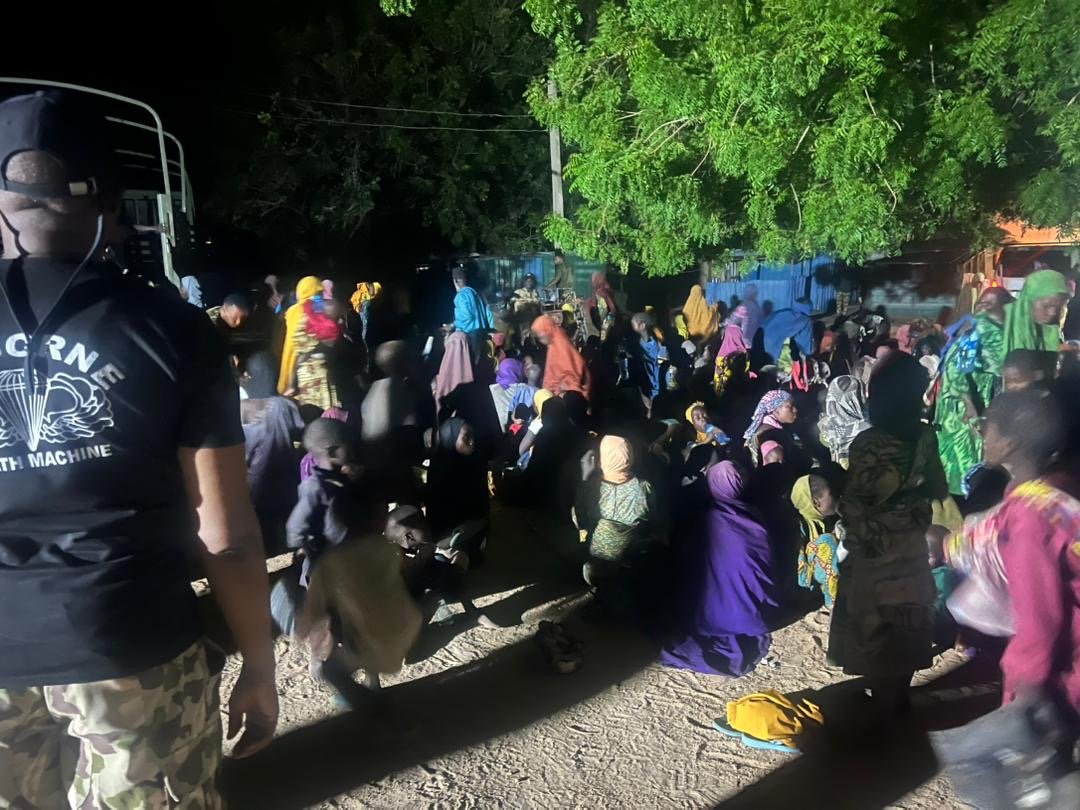
Military authorities subsequently provided full operational support in securing, receiving and evacuating the victims from the difficult mountainous terrain before profiling and preparing them for formal handover to the Borno State Government for reunification with their families.
The rescued victims, mostly women and children, were abducted for months from several communities across the Ngoshe axis and other locations in southern Borno. Many had endured severe hardship, deprivation and prolonged captivity in insurgent-controlled enclaves hidden within the mountainous border region.
According to security officials familiar with the operation, the breakthrough followed weeks of painstaking intelligence gathering, analysis as well as Intelligence, Surveillance and Reconnaissance (ISR) by the troops and intelligence communities.
The intelligence effort enabled security agencies to accurately identify the location of the captives, map insurgent positions, assess movement patterns and understand the internal structure of the terrorist enclave. This level of situational awareness proved critical in minimizing risks to the hostages and ensuring operational success.
Sources revealed that a decisive turning point came after Information obtained through various channels provided real-time details on the location of the abductees, the disposition of insurgent commanders and the security arrangements around the camp.
With intelligence dominance established, troops of the Joint Task Force (North East) Operation HADIN KAI, including DSS personnel, Special Forces and personnel from Sector 1, commenced a carefully planned operation aimed at isolating the target area and preventing insurgent reinforcement or escape.
Supported by real-time surveillance feeds, assault teams infiltrated the objective area under the cover of darkness while blocking forces occupied strategic positions along likely withdrawal routes. The operation achieved complete tactical surprise.
Faced with the speed and precision of the advancing troops and the overwhelming pressure created by the broader intelligence-led effort, several insurgents reportedly abandoned their positions and fled into surrounding mountainous terrain.That enable the troops to safely secured and evacuated the hostages.
Despite the success of the mission, security officials disclosed that two infants tragically died from exhaustion and complications associated with the harsh conditions endured during captivity and the demanding evacuation through difficult mountain routes.
The remaining 360 rescued victims were safely evacuated and provided immediate medical attention, humanitarian assistance and psychological support.
The operation illustrated the increasing importance of intelligence fusion and inter-agency cooperation in modern counterterrorism operations.
Unlike conventional military assaults, the rescue mission relied heavily on synchronized intelligence collection, covert penetration of terrorist networks, persistent surveillance and coordinated operational planning involving multiple security institutions.