
Kasa killings: Army commander faces backlash after refusing to release recovered AK-47
By: Zagazola Makama
The campaign of allegations against the Army sector commander in Barkin Ladi following his refusal to release a recovered AK-47 rifle exposes a disturbing attempt by some dubious community actors to turn professional military conduct into an ethnic controversy in Plateau State.
The latest controversy surrounding a highly professional senior officer of the Nigerian Army, Col. Victor Asuquo, Sector Commander of Barkin Ladi, for refusing to compromise with the locals, is revealing a dangerous new dimension to the Plateau crisis.
The allegation that the commander is “supporting Fulani” because he refused to hand an assault rifle recovered at a violent crime scene to local youths is not only unsubstantiated; it dangerously distorts the basic responsibility of a security commander.
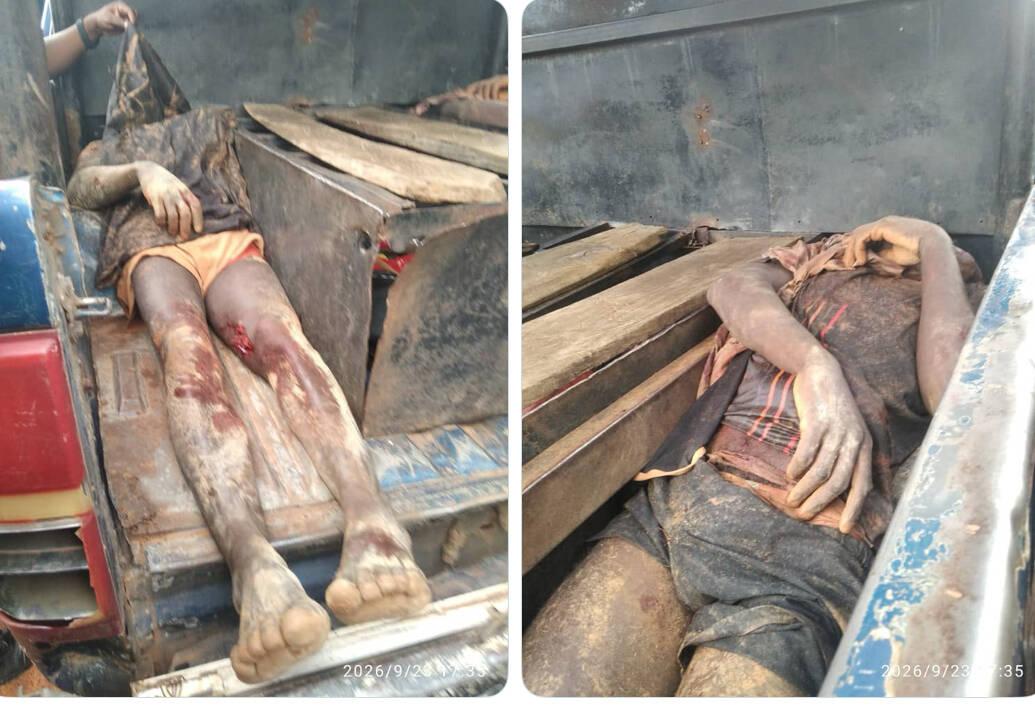
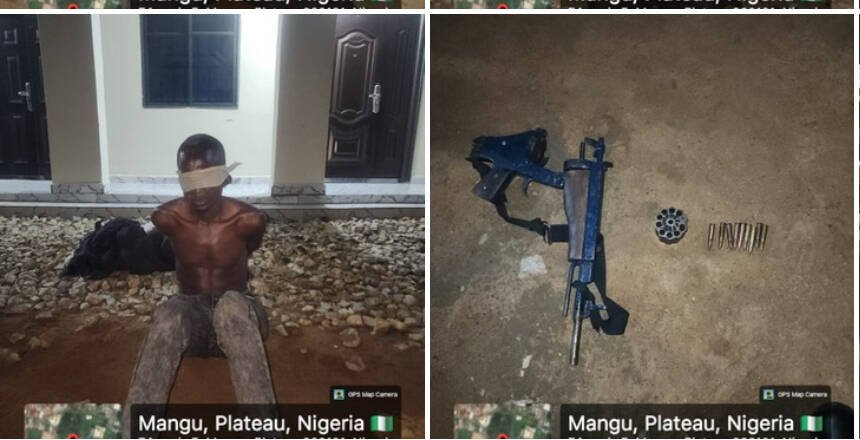
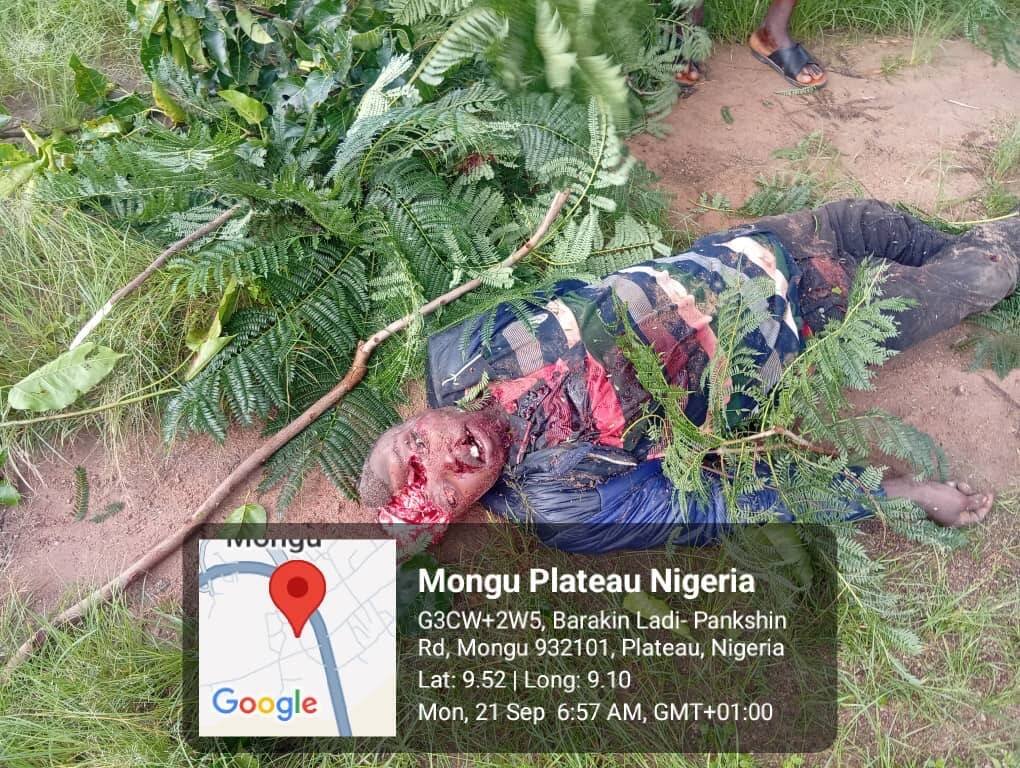
According to the account, troops responding to reports of gunfire around Kassa discovered three dead persons and recovered an AK-47 rifle with ammunition, reportedly about nine rounds. Some of the locals allegedly demanded that the rifle be returned to them on the grounds that it belonged to the deceased youth leader, who was killed during a heavy exchange of fire with the Fulani armed men, but the Sector Commander refused.
That refusal subsequently became the centre of a confrontation between the Army troops and some of the youth leaders, who mobilised women and youths in the community to protest, demanding the removal of the Army troops from Barkin Ladi.
Despite intervention by some community leaders, the Sector Commander insisted that when such a weapon is recovered at a scene where people have been killed, its chain of custody, ballistic examination, ownership and possible use in the incident become matters for law-enforcement investigation. Returning it to a private individual or community group means potentially returning the weapon to an armed actor.
The question that should be asked is: How did a civilian youth leader acquire an AK-47 rifle that was only legally approved for the Nigerian Army, Police and other security agencies? Was it licensed or issued by a recognised security institution? Who supplied the ammunition?
Why was an assault rifle being held by a civilian group in an already volatile environment? These are questions that should be answered through investigation, not through street pressure.
The reported confrontation also illustrates how difficult the task of security forces has become in Barkin Ladi.
Youth leaders in Barkin Ladi had, in many instances, attempted to woo the Sector Commander to attack and dislodge Fulani communities within the area, but the commander reportedly refused on many occasions, insisting that if they were concerned about the presence of armed persons or communities in particular locations, such matters should be presented to the state government rather than asking the military to conduct an illegal operation to remove civilians from their homes. That also didn’t go well with the community leaders.
The Commander stood his ground, insisting that the Nigerian Army is not a land-reclamation agency. It cannot decide, on the basis of pressure from one community, that another civilian population should be expelled from a settlement, insisting that if there are legitimate disputes over land ownership, traditional boundaries, settlements or historical agreements, those issues require civilian administrative, judicial and political processes. Security forces can protect lives and prevent violence while those disputes are addressed.
The blackmail against the Nigerian Army troops did not start now. In April 2026, angry women and youths in the Kassa and Gashish communities of Barkin Ladi Local Government Area in Plateau State attacked soldiers and destroyed a military checkpoint. The protest and attack followed the burial of a resident, Gyang Nuhu Choji, allegedly killed in a reprisal attack by Fulani armed attackers. The “crime” of the troops was simply resisting allowing the local militia to cross over to carry out an attack on Fulani communities.
Eventually, they succeeded in dislodging the troops from the location and bringing another security outfit to the location. Since then, attacks have increased in the surrounding locations as criminal Berom youths continue to carry out attacks and targeted killings, which have resulted in reprisals by the fulani attackers. The timing of the Kassa confrontation cannot be ignored. The latest dispute did not occur in a vacuum.
On Sept. 20, reports emerged that five Fulani men travelling from Barkin Ladi towards Jos South were killed in an attack around the Kassa axis. MACBAN identified the victims as Buhari Yusuf, Aminu Ahmad, Nasiru Abdullahi, Gambo Abubakar and Muhammad Abdul Rahman, and alleged that the attackers were Berom militia members. The killings themselves have been reported by multiple outlets.
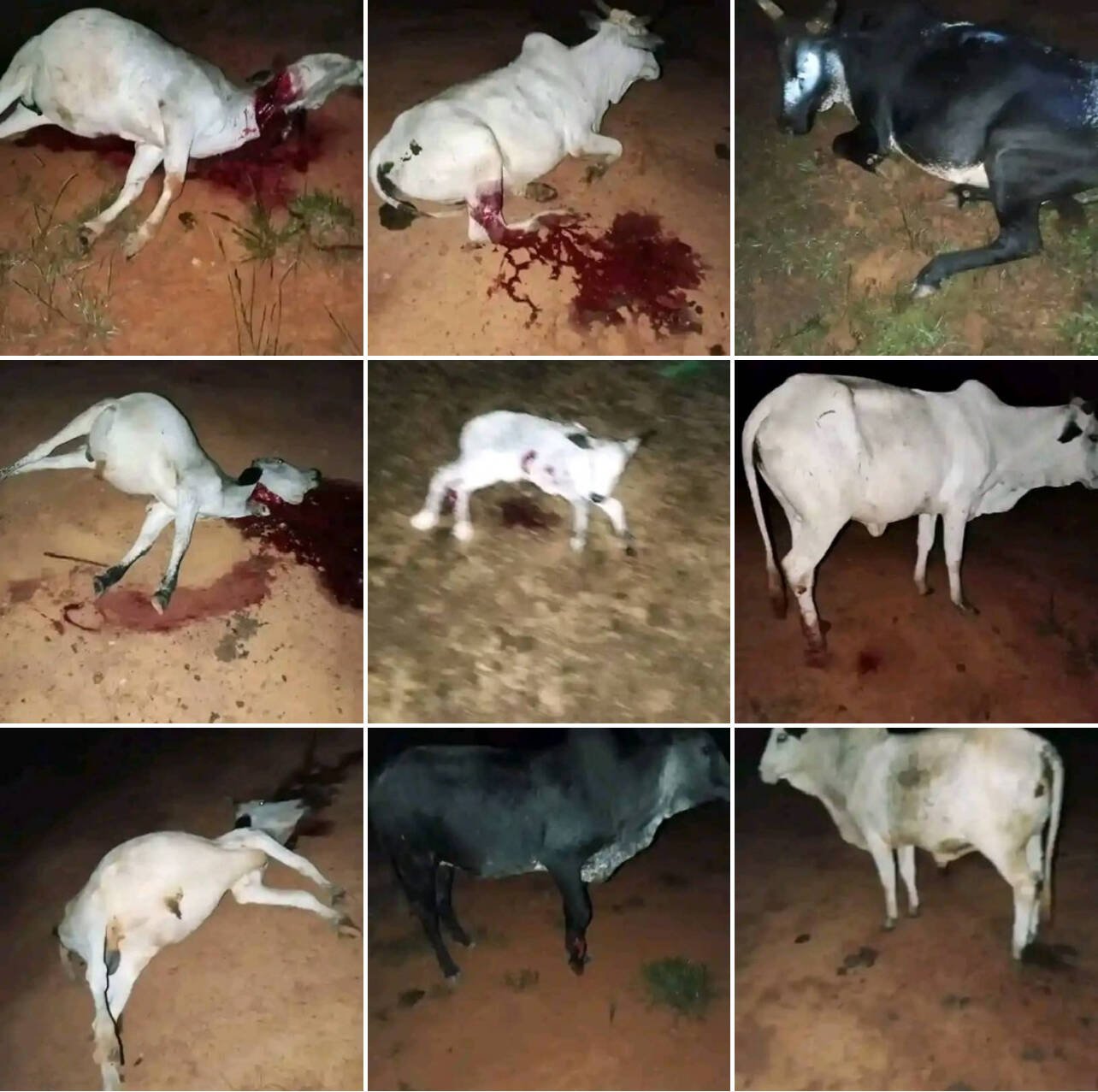
Earlier in September, Berom militiamen reportedly attacked Fulani herders around Jong-Nyeriwei and Dorowa Babuje in Barkin Ladi, including killings and cattle rustling.
There were further several reports of attacks on herders and cattle around Plateau during the same period.
These incidents demonstrate that the conflict is no longer simply a question of one community defending itself against invasion by another community. It is a well known cycle involving community-backed militias, criminal actors, vigilantes, armed individuals, retaliatory attacks, cattle rustling, targeted killings, misinformation and growing distrust of security institutions. That is precisely why community leaders must stop presenting every security intervention through an ethnic lens.
This matters because reprisal violence does not normally begin with the person pulling the trigger in the second attack. It is often prepared psychologically by the first attack, followed by mobilisation, rumours, threats and demands for revenge. That appears to be precisely the situation confronting Barkin Ladi and other parts of Plateau state.
There is an uncomfortable political reality emerging in Barkin Ladi. Youths and community actors appear to demand maximum military intervention when their own people are attacked, but become suspicious of the same security forces when soldiers prevent them from retaliating against another community. That is an impossible standard.
A security commander cannot be expected to protect civilians from armed Fulani attackers on Monday and then ignore armed members of another community on Tuesday simply because they claim to be protecting themselves and, in disguise, continue to carry out mass murder and stealing of livestock. The same standard must apply to everybody. An AK-47 does not become legitimate because it is held by a Berom militia.
And an armed Fulani fighter does not become legitimate because he claims to be protecting Fulani communities or his livestock. The same principle applies to criminal gangs, vigilantes, militia formations and politically connected individuals.
Some of the youths also complained about military surveillance drones operating in the area, alleging that whenever the drones flew over their communities, attacks subsequently occurred, accusing the Army of collaborating with the bandits to carry out attacks.
The military commander reportedly rejected the allegation, explaining that surveillance operations were conducted to improve situational awareness and protect communities rather than support any ethnic group.
The latest dispute has therefore raised concerns over attempts by some dubious youths leaders to pressure security personnel into taking positions in what has increasingly become a complex cycle of communal attacks, retaliation and counter-retaliation.
The Nigerian Army’s responsibility has become particularly difficult in an area where these competing communities expect the security forces to protect them while simultaneously suspecting them whenever military decisions do not conform to their expectations.
For the troops, the assignment is not simply about confronting armed attackers. It is about protecting civilians, preventing reprisals, recovering weapons, responding to distress calls, securing roads, protecting communities and stopping isolated incidents from developing into wider communal violence.
That responsibility comes with enormous personal risk. The public often sees the military when soldiers arrive in gun trucks. What is less visible is what happens before and after those deployments. Troops move into areas where armed men may be hiding among difficult terrain. They respond to distress calls at night. They patrol roads after communities have been attacked.
They secure burial ceremonies because intelligence indicates that mourners could themselves become targets. And sometimes, they pay the ultimate price from both Fulani attackers and Berom or Mwaghavul militia men.
Recent attacks in Plateau have demonstrated that security personnel are not immune from the violence they are deployed to contain. Police and security personnel have themselves been killed while responding to emergencies. Every such death should remind Nigerians that the men in uniform are not operating from behind a desk. They are walking into the same danger that civilians fear.
The youths and political actors pushing these allegations should be reminded that security forces have repeatedly intervened to protect them. If the commander were genuinely interested in harming the community, why would troops repeatedly deploy to protect its people?
The state has suffered enough from the politics of victimhood. Every community has its dead. Every community has its grievances. Every community can produce a list of atrocities committed against its people. But none of those grievances gives anybody the right to demand that the Army become an instrument of revenge.
In Plateau, the language of security has increasingly been contaminated by the language of communal allegiance. That must change. If soldiers protect a Fulani settlement, it does not mean they are Fulani. If they protect a Berom community, it does not mean they are Berom. If they rescue a Christian victim, they have not become Christian militants. If they rescue a Muslim victim, they have not become Muslim sympathisers.
They are soldiers of the Nigerian state. Their obligation is to the Constitution and the protection of human life. That principle is particularly important in Plateau because every successful reprisal creates the conditions for another reprisal. Stopping that cycle sometimes requires soldiers to make decisions that will be unpopular with one community or another. That is precisely why professional commanders must be allowed to operate without communal intimidation.
The Nigerian army did not create Plateau’s historical grievances. Neither did they create the farmer-herder conflict. They did not create cattle rustling. They did not create militia mobilization. Instead, they inherited a security environment in which decades of mistrust have made every incident potentially explosive. The responsibility of the troops is therefore to prevent today’s violence from becoming tomorrow’s massacre.
That requires difficult decisions. Sometimes it means refusing a community’s demand.
Sometimes it means disarming people who believe they are protecting themselves. Sometimes it means deploying troops to protect people whom another community considers hostile. And sometimes it means standing between two angry groups and telling both of them No.
That is what professional security leadership looks like. Behind the commander are hundreds of soldiers whose names will never appear in newspapers.
They are the ones sitting in checkpoints through the night. The ones sleeping beside their vehicles. The ones eating whatever is available during patrols. The ones calling home after an operation simply to reassure their families that they are alive. The ones moving towards gunfire while civilians are moving away from it. Some will return home with physical injuries. Others will carry memories that they will never publicly discuss. And some will never return.
Their sacrifice deserves recognition without turning them into heroes of one community against another. They should be recognised as Nigerian soldiers serving Nigerians.
The greatest contribution the public can make to the military at this difficult moment is cooperation. Community leaders should provide credible intelligence. Youth leaders should discourage retaliation. Traditional rulers should speak against inflammatory mobilisation. Politicians should resist the temptation to turn every security operation into a political contest.
Religious leaders should reject collective blame.
And residents should allow investigations to determine who is responsible for attacks.
Zagazola Makama is a Counter-Insurgency Expert and Security Analyst in the Lake Chad Region.