
Military airstrikes obliterate ISWAP logistics base, kill scores of ISWAP and Collaborators in Jilli axis
By: Zagazola Makama
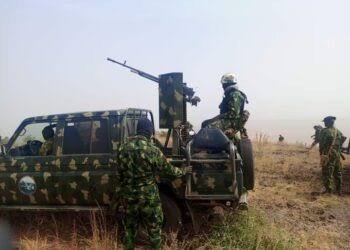
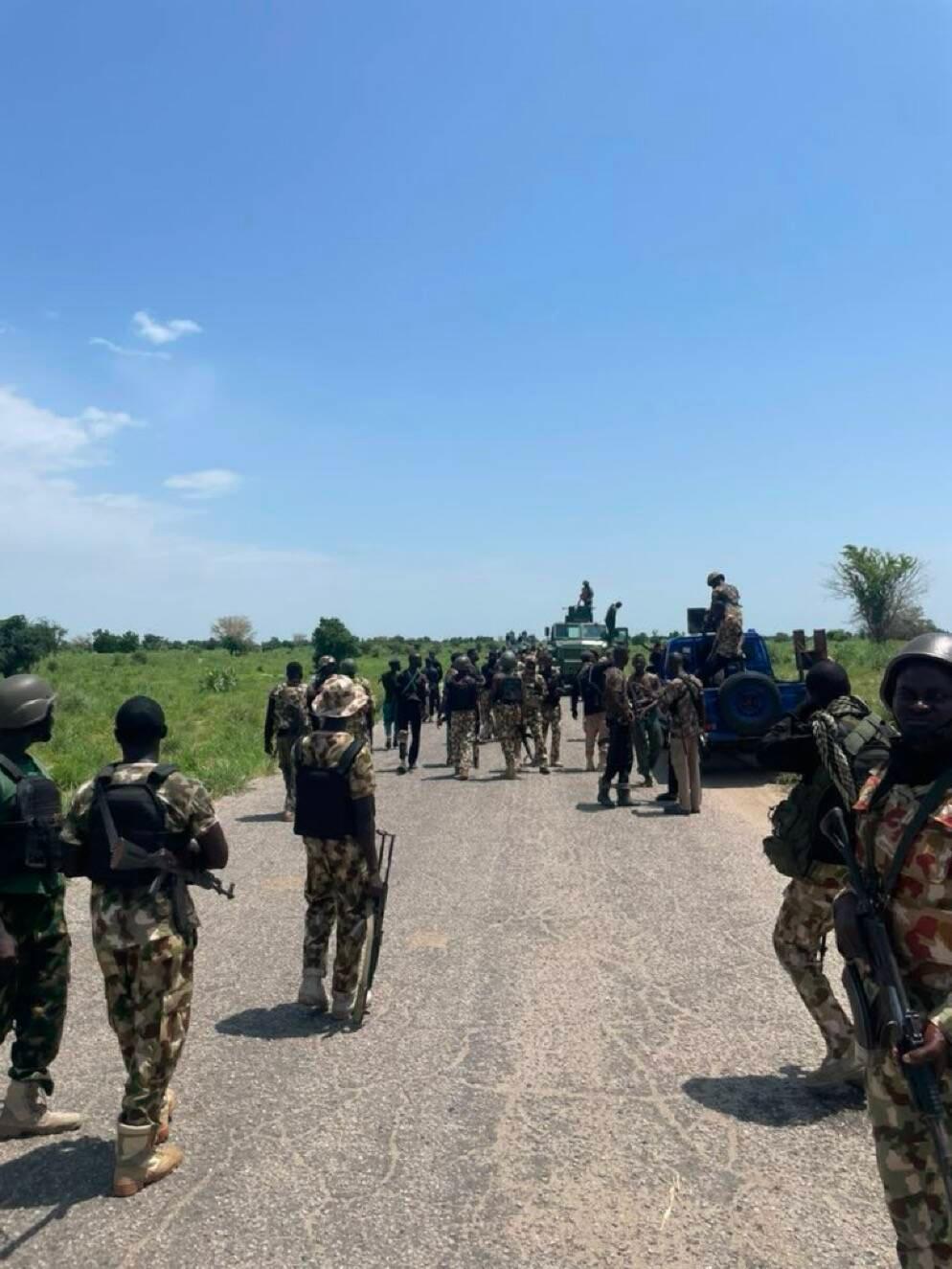
The Air Component of Operation Hadin Kai (OPHK) has carried out a series of precision airstrikes on a major Islamic State West Africa Province (ISWAP) logistics hub in Jilli, Gubio Local Government Area of Borno, neutralising scores of terrorists, their collaborators and destroying their assets.
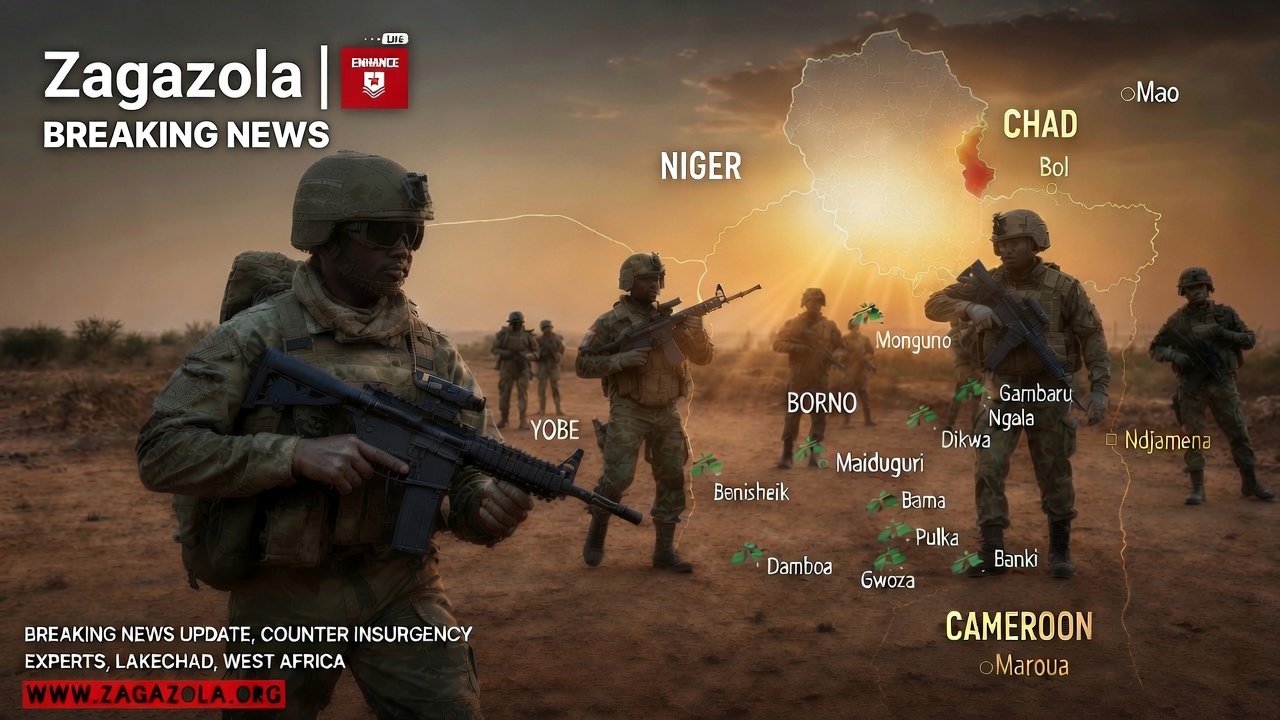
Military sources said the strikes, conducted on April 11, were intelligence-driven and targeted a known terrorist enclave and convergence point along the Bindul–Jilli axis, a corridor long identified as a strategic movement route for insurgents and their logistics handlers.
The strikes were not isolated incidents but part of a broader, intelligence-driven campaign aimed at dismantling the operational backbone of the Islamic State West Africa Province (ISWAP) across key corridors in the theatre.
According to the Media Information Officer, Headquarters Joint Task Force (North East) Operation Hadin Kai, Lt.-Col. Sani Uba, the operation followed sustained Intelligence, Surveillance and Reconnaissance (ISR) missions, which tracked the movement of suspected ISWAP fighters using motorcycles and gun trucks converging on the location.
“During the surveillance mission, a contingent of motorcycles was observed moving towards Jilli, followed by additional vehicles, all converging on the same location,” a source said.
Uba added that the intelligence was corroborated by multiple human intelligence channels, confirming that those gathered were terrorists, collaborators, and logistics couriers preparing for coordinated attacks.
“Upon confirmation of target fidelity, the Air Component executed precision strikes on the enclave. Post-strike assessment showed high accuracy, with the destruction of terrorist vehicles, including motorcycles and a gun truck, and the neutralisation of several fighters,” he added.
Field reports indicated that at least two motorcycles and one vehicle were destroyed during the strike, while several terrorists were killed. Dozens of civilians working with the insurgents were also touched in the strikes.
However, some insurgents reportedly took cover upon hearing the approaching aircraft and later returned around 1900 hours to evacuate bodies of those killed. Further intelligence revealed that some of the terrorists were present at a local market within the enclave at the time of the strike.
Findings indicate that Jilli, once a civilian settlement, has since 2018, been abandoned and transformed into a fortified enclave under the control of insurgents. They levies and taxes to terrorists.
Security sources described the area as a “no man’s land,” with no legitimate civilian activity, but rather a hub for ISWAP terrorists from Bulabulin forest and Gaidam Chukwu. Its also served as a terrorist convergence, logistics distribution, and operational planning areas.
The so-called weekly market within the axis, according to field intelligence, functions not as a civilian trading centre but as a supply node where insurgents and their collaborators exchange goods, coordinate movements, and sustain their fighting capability.
Sources familiar with such activities said that there was no legitimate civilian presence in the area. It is a Boko Haram-controlled market used exclusively by terrorists and their collaborators for logistics and coordination,” a military intelligence officer said, illustrating the extent of insurgent dominance in the area.
This classification significantly influenced the decision-making process leading to the airstrikes, as any form of organised movement within the zone is treated as hostile under existing operational directives.
Overhead surveillance had persistently tracked suspicious movements along the Bindul–Jilli axis, a route already linked to previous attacks, including the January Improvised Explosive Device (IED) incident that claimed the lives of eight soldiers.
Meanwhile, the Yobe State Government confirmed that some individuals from Geidam Local Government Area, who had crossed into the Jilli market, were affected by the airstrike.
In a statement signed by Brig.-Gen. Dahiru Abdulsalam (rtd), Special Adviser on Security Matters to the Governor, the victims were evacuated to the Geidam Specialist Hospital and are currently receiving treatment.
“It has become necessary to set the records straight. The Air Component of the Joint Task Force, (Northeast) Operation HADIN KAI conducted an air strike mission on Jilli ( a Boko Haram stronghold) of Gubio Local Government Area in Borno State, yesterday Saturday, 11th April 2025,”he said.
The military, however, further reiterated that the use of motorcycles remains strictly prohibited across the North-East operational theatre due to their extensive use by terrorist elements for mobility and attacks.
It stressed that any such movement within restricted zones would be treated as hostile in line with operational directives.
The Nigerian Air Force also confirmed that follow-up mop-up strikes were conducted on fleeing insurgents and regrouping cells within the Jilli axis to consolidate gains from the initial attack.
Air Commodore Ehimen Ejodame, Director of Public Relations and Information, Nigerian Air Force, said the sustained strikes illustrated the growing effectiveness of intelligence-led joint operations.
He said the Air Force remained committed to maintaining persistent surveillance and executing precision strikes to disrupt terrorist networks, protect civilians, and restore lasting peace in the North-East.
The military assured residents of its resolve to sustain pressure on terrorist enclaves and dismantle their logistics networks across the theatre.