Buni administration constructs over 500km roads in seven years — Yobe Govt
By: Zagazola Makama
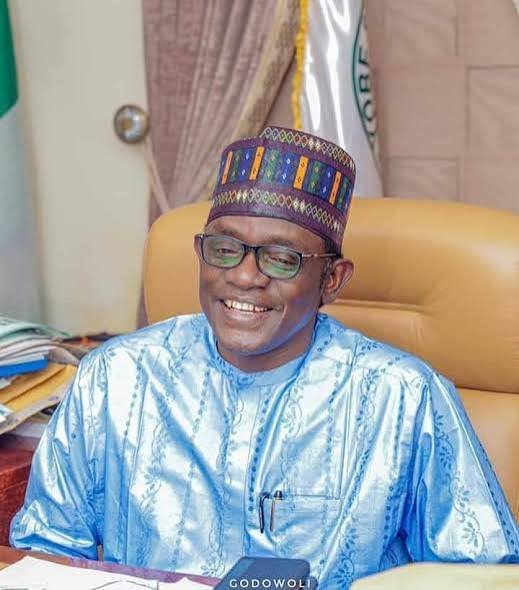
Over the past seven years, the administration of Gov. Mai Mala Buni has steadily transformed Yobe State’s physical landscape through one of the most ambitious infrastructure and urban renewal programmes in the state’s history.
From modern road networks to major urban renewal projects, the administration’s investment in infrastructure has continued to redefine mobility, economic activities, and social development across the state.
Speaking during a press conference marking the seventh anniversary of the administration in Damaturu, the Acting Secretary to the State Government (SSG), Dr Mohammed Goje, said infrastructure development remained one of the defining pillars of the Buni administration.
According to him, the government has constructed, rehabilitated, and upgraded more than 500 kilometres of roads across Yobe in the last seven years.
He explained that the projects had significantly improved transportation, strengthened economic activities, and enhanced access to essential services in both urban and rural communities.
“The investments have transformed transportation networks, improved access to markets and social services, stimulated economic activities, and strengthened connectivity between urban and rural communities,” Goje said.
One of the administration’s flagship projects is the ongoing Damaturu Flyover and Underpass Bridge, which many residents describe as a major symbol of modernization in the state capital.
The project, currently attracting public attention, is expected to ease traffic congestion, improve urban mobility, and enhance the aesthetics of Damaturu.
The government is also undertaking the dualization and reconstruction of the 26-kilometre Damaturu–Kalallawa Road as part of efforts to expand road capacity and support increasing commercial activities within the capital city and surrounding communities.
Other major projects highlighted by the government include the construction of the 11-kilometre Damaturu–Gambir Road, expansion of Potiskum Road, reconstruction of the Waziri Ibrahim Bypass, and several township and inter-community roads spread across the three senatorial zones of the state.
Analysts say the spread of the projects across the state reflects deliberate efforts by the administration to ensure equitable infrastructure development.
In the northern part of the state, roads such as the 16-kilometre Nguru–Balanguwa Road have improved access for farming and trading communities, while the 17-kilometre Ngelzarma–Mashio Road has enhanced movement between communities that previously suffered poor road connectivity.
Similarly, the 34-kilometre Jajere–Danchuwa Road and the 18-kilometre Garin Bingel–Danchuwa Road are expected to boost agricultural activities and facilitate easier transportation of farm produce to markets.
Residents and transport operators have noted that many of the roads have reduced travel time and transportation costs, especially in rural communities where poor access roads previously hindered movement during rainy seasons.
The administration also executed the 12-kilometre Damagum–Gubana Road and several township roads aimed at improving internal road networks and supporting urban expansion.
Beyond transportation, observers believe the infrastructure projects are gradually opening up economic corridors across the state.
According to Goje, the projects are not merely physical structures but strategic investments designed to support long-term economic integration and regional development.
“These projects are strategic investments in economic integration, mobility, social inclusion, and regional development,” he said.
He added that the roads had enhanced access to healthcare and education, opened agricultural production corridors, attracted private investment, and laid the foundation for long-term economic transformation.
The road infrastructure remains critical to economic growth, particularly in largely agrarian states like Yobe where access to markets and services directly affects livelihoods.
The improved roads have translated into easier access to hospitals, schools, markets, and government services.
Commercial drivers and traders in some parts of the state also report increased business activities due to improved movement of goods and passengers.
The government maintains that the ongoing urban renewal and road expansion projects are part of a broader strategy to reposition Yobe for sustainable growth after years of security and developmental challenges.
As the Buni administration marks seven years in office, infrastructure development continues to stand out as one of its most visible and impactful legacies, shaping not only the physical outlook of Yobe State but also its economic and social future.