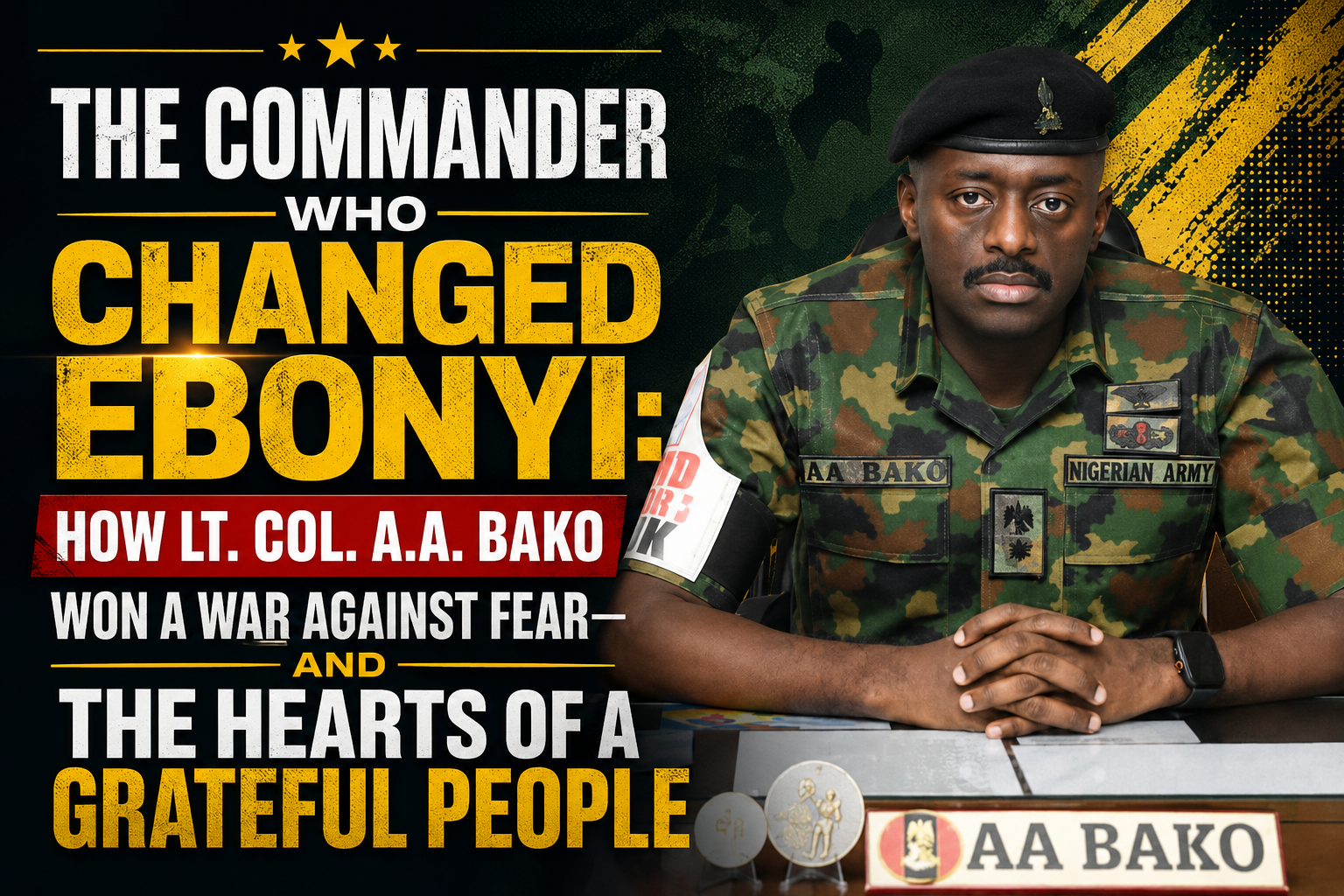
The Commander Who Changed Ebonyi: How Lt. Col. A.A. Bako Won a War Against Fear—and the Hearts of a Grateful People
By Zagazola Makama
When Lt. Col. A.A. Bako first arrived in Ebonyi State, few people knew his name. To many, he was simply another military commander posted to a state battling violent attacks by suspected members of the outlawed Eastern Security Network (ESN). Communities were gripped by fear, security personnel were under constant threat, and confidence in public safety had eroded.
Yet, within months, the quiet officer from Kano State would become one of the most celebrated military commanders ever to serve in Ebonyi, not because he sought recognition, but because he earned it on the battlefield and in the hearts of the people.
His story resurfaced on Tuesday when Ebonyi State Governor Francis Nwifuru, while receiving the Chief of Army Staff, Lt.-Gen. Waidi Shaibu, set aside his prepared speech to tell the remarkable story of an officer whose courage, leadership and selflessness transformed the state’s security landscape.
For the governor, it was more than a military success story. It was a deeply personal account of how one commander changed the trajectory of an entire state.
“I doubted him when I first saw him”
Governor Nwifuru admitted that he was initially unconvinced when the then Chief of Army Staff late Lt Gen Toareed Lagbaja assured him that help was on the way.
At the time, insecurity had reached alarming levels. Armed separatist fighters had established footholds in several communities, forcing residents to flee while security agencies struggled against heavily armed attackers.
Seeking urgent intervention, the governor approached the Army leadership.
“The Chief of Army Staff simply told me, ‘Consider it done. I will send somebody,’” Nwifuru recalled. That officer was Lt. Col. A.A. Bako. The governor confessed that his first impression was one of doubt.
“I looked at this young man and wondered whether he truly understood what Ebonyi was facing. I even thought he looked too young for the assignment.” Sensing his reservations, the Army Chief offered him reassurance.
“He told me, ‘Give him one month. If you don’t see any difference, I will replace him.’” One month later, the governor said, everything had changed.
Unlike commanders who directed operations from a distance, Bako chose to fight alongside his men.
According to Governor Nwifuru, the young commander quickly earned the confidence of officers and soldiers across the various Army formations in Ebonyi by leading from the front.
He was not merely concerned with planning operations; he believed in inspiring those who executed them. One conversation, the governor said, has remained with him ever since.
“The reward system is very important,” Bako had told him. “When officers perform well, appreciate them immediately. It motivates others to do even more.” That philosophy became part of his command style.
Gallantry was rewarded. Professionalism was celebrated. Every success became a source of motivation for the next mission. It transformed morale within the ranks and created a force that believed in itself.
The Battle That Changed Everything
For Governor Nwifuru, one operation forever defined Bako’s leadership. Suspected ESN fighters had launched a devastating attack near a police formation. The attackers possessed overwhelming firepower. The police, heavily outgunned, were forced to withdraw.
Fear spread rapidly. Then Bako arrived.
Instead of directing troops from a safe distance, he climbed into an armoured vehicle and personally led the assault. He did not care that bullets were flying everywhere,” the governor recalled. He moved forward himself. He directed the operation from the front.”
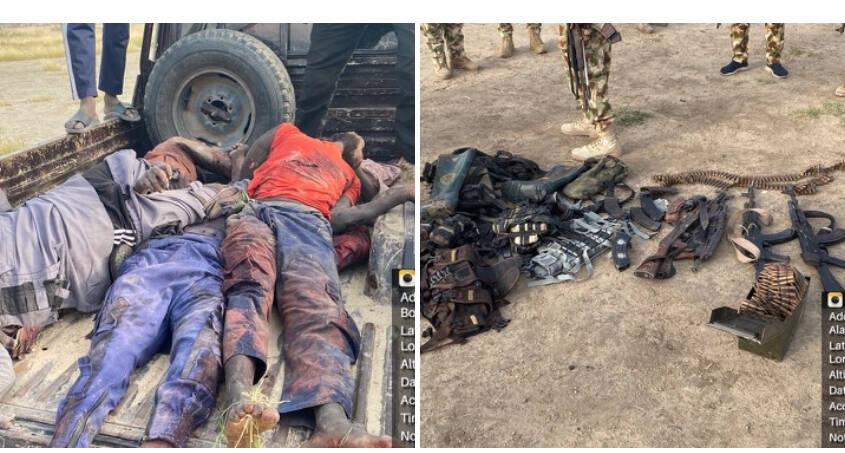
The fierce battle ended with the gunmen neutralised and their stronghold dismantled.
For the governor, however, the greatest victory was psychological. That operation changed everything. It changed the psychology of the criminals. It changed the psychology of our people.”
From that day onward, residents stopped panicking whenever reports of armed men emerged. “They would simply say, ‘The Army is coming.’ “And once they heard that, they became confident.”
Peace Returns
Under Bako’s operational leadership, intelligence-driven operations intensified.
Attacks were disrupted before they occurred.
Hideouts were dismantled. Criminal networks weakened. Public confidence returned.
Governor Nwifuru said the transformation was so profound that the state government strengthened its partnership with the military, providing logistics and rewarding outstanding officers.
Today, he said, the Army often acts before he even has to request assistance. Before I even think of calling for help, they have already responded. Every day I receive intelligence reports of planned attacks that have been foiled and suspects arrested before they could strike.”
The Day an Entire Community Came Out to Say Goodbye
If there was ever any doubt about the impact Lt. Col. Bako had on Ebonyi, it disappeared on the day he was posted out of the Nkwagu Military Cantonment in Abakaliki. What was expected to be a routine military farewell turned into an emotional community celebration rarely witnessed for a serving Army officer.
From the early hours of the day, residents abandoned their daily activities and converged on the cantonment. Market women.
Traditional leaders. Religious figures. Retired military personnel. Civil servants. Youth groups.
Children. Former National Youth Service Corps (NYSC) members. Entire families.
They came not because they had been invited, but because they wanted to say thank you.
Roads leading to the cantonment became lined with cheering residents waving flags, singing songs and offering prayers for the departing commander. Many struggled to hide their emotions. Others openly wept.
For many in Ebonyi, Bako was not merely leaving a military posting. He was leaving behind a safer state than the one he met.
A Legacy Beyond the Barracks
Among those paying tribute was former corps member, Glory Daniel Ajah. With emotion in her voice, she described a commander whose influence extended far beyond military discipline. Sir, your leadership was not just felt; it was experienced. You led with purpose, treated everyone with respect and made the cantonment a place of learning, growth and excellence.” Others described him as firm but fair.
Quiet but highly effective. Demanding but compassionate. Professional but approachable.
Soldiers remembered a commander who shared risks with them. Residents remembered a man who restored hope. Young officers remembered a mentor who believed leadership was earned, not imposed.
A Farewell Reserved for Heroes
The farewell ceremony itself reflected the respect he had earned. Military units under his command staged an impressive parade, displaying the discipline and professionalism he had instilled. Tributes flowed freely.
Songs filled the air. Banners bearing messages of appreciation fluttered across the cantonment.
Children of soldiers stood beside community elders as everyone joined in celebrating a commander whose service had transcended the walls of the barracks. There were no elaborate political speeches. No grand declarations.
Only sincere gratitude. It was less a farewell and more a community’s way of saying thank you.
The Measure of Leadership
Governor Nwifuru believes the greatest legacy of Lt. Col. A.A. Bako cannot be measured solely by the number of operations conducted or criminal hideouts dismantled. His true legacy lies in restoring confidence where fear once prevailed. “People see soldiers in uniform,” the governor reflected. But behind every peaceful community are officers who make difficult decisions and put their lives on the line for others.
“If nobody praises them, Ebonyi people will continue to appreciate them because we know the price they have paid for the peace we enjoy today.”
Long after the farewell parade ended and the convoy carrying Lt. Col. Bako departed Nkwagu Cantonment, the memory of that day remained etched in the minds of many. Lt. Col. A.A. Bako did not simply complete a military posting in Ebonyi.
He left behind a legacy of courage, trust and peace one that transformed a state once haunted by fear into one that now looks to the future with renewed confidence.