
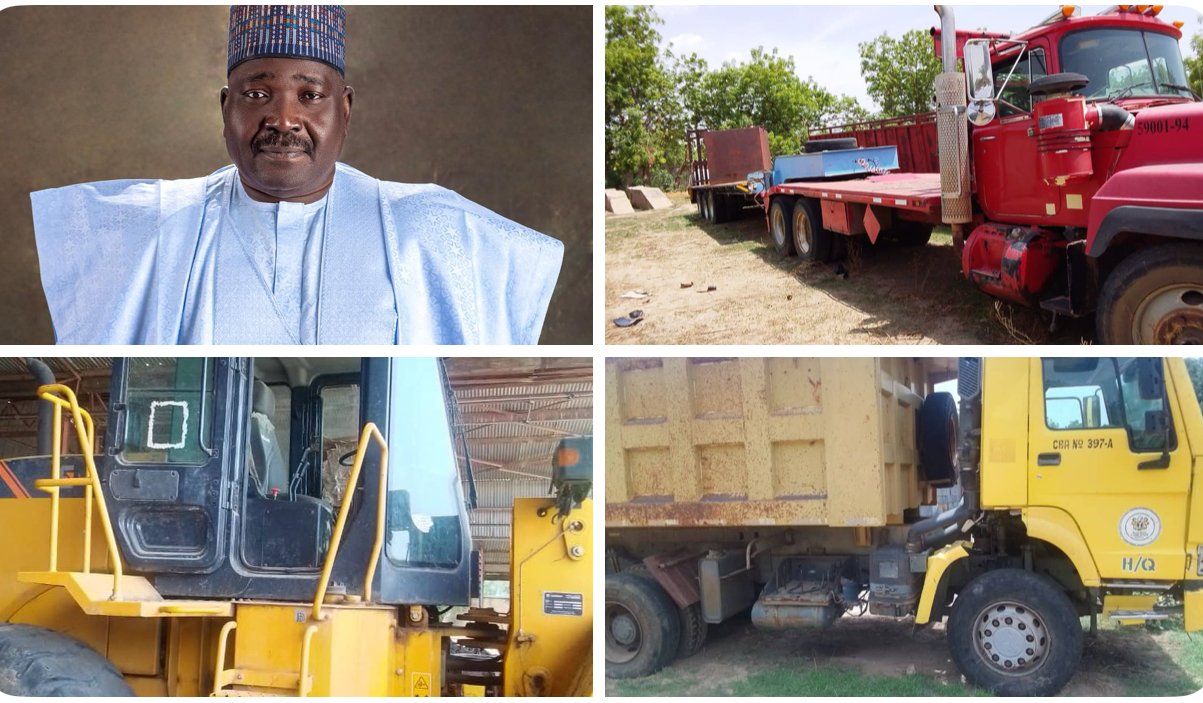
Zulum Urges FG to Protect Chad Basin Assets as Senate Probes Alleged Irregular Auction of Equipment
By: Zagazola Makama
Gov. Babagana Zulum of Borno has called on the Federal Government to safeguard critical assets belonging to the Chad Basin Development Authority (CBDA), warning that attempts to dispose of serviceable equipment under the guise of scrap metal auction could undermine agricultural recovery and economic development in the Lake Chad region.
Zulum’s call comes amid growing controversy surrounding allegations of irregular asset disposal, revenue diversion and financial misconduct within the authority, allegations that have also attracted the attention of the Senate Committee on Water Resources and Sanitation.
The governor, in a statement issued by the Directorate of Information, Ministry of Information and Internal Security, Borno State, expressed concern over reports that some individuals were attempting to remove operational equipment from CBDA facilities across northern Borno.
“It has come to the attention of the Borno State Government that some unscrupulous elements are attempting to cart away the heavy equipment domiciled at the CBDA premises and booster stations across Northern Borno in the name of scrap metal auctioning.
“The Federal Government procured this equipment at a high cost, and it is serviceable. There is no reason whatsoever to auction them, as doing so will decapitate the CBDA and cripple the agricultural value chain in our state,” Zulum said.
The governor noted that the Federal Government established the CBDA to harness the agricultural and water resources potential of the Lake Chad Basin through irrigation farming, livestock production, water supply and rural development programmes.
According to him, the recent reconstitution of the authority’s management by the Federal Ministry of Water Resources was intended to revive the organisation’s mandate and support food security, agricultural development and rural livelihoods across the North-East.
Zulum listed some of the equipment allegedly being targeted for disposal as irrigation facilities, booster stations, drilling machines, electricity-generation equipment, tractors, bulldozers, combine harvesters, pipelines and crop-processing machines.
He warned that removing such assets would effectively cripple the authority’s operational capacity and undermine efforts to revitalise agriculture in the region.
The governor further linked illegal metal scavenging to insecurity in Borno, noting that scrap metal activities had previously been associated with criminal networks and insurgent elements operating around the Lake Chad Basin, Sambisa Forest and the Timbuktu Triangle.
“In the context of Borno State, any attempt to allow metal scavenging will not only bolster insurgency and criminality but will also sabotage national defence and security,” he said.
Zulum reiterated that the state’s ban on scrap metal activities remained in force and urged the Presidency, the Federal Ministry of Water Resources and security agencies to intervene and prevent the removal of public assets.
His intervention follows a series of allegations raised by whistleblowers within the authority and publicised in investigative reports, which claimed that assets originally classified as unserviceable were being disposed of through a controversial auction process.
The reports alleged that the disposal exercise had expanded beyond obsolete equipment to include serviceable and recently acquired government assets procured between 2020 and 2023.
According to the allegations, equipment reportedly affected include excavators, bulldozers, graders, drilling rigs, tractors, fuel tankers, combine harvesters, generators, transformers, official vehicles and other machinery linked to federal projects in Borno.
The whistleblowers further alleged that the disposal process lacked transparency and may have been conducted without adequate stakeholder consultation, public advertisement or competitive bidding.
They also raised concerns about alleged diversion of internally generated revenue from equipment leasing and guest house operations.
The reports named members of the current management led by the Managing Director, Tijjani Musa Tumsah, alongside other senior officials of the authority.
The controversy prompted the Senate Committee on Water Resources and Sanitation to summon the management of the authority for an investigative session at the National Assembly.
In a letter dated May 26, 2026, signed by the Clerk of the Committee, Mr Ememike Nwofor Leonard, the Senate directed the authority’s leadership to appear before it and provide comprehensive documentation relating to the ongoing disposal of assets.
The committee requested details including asset registers, valuation reports, bidding documents, approvals from relevant regulatory agencies, records of stakeholder consultations and information on successful bidders.
The Senate said it was concerned that it had not been adequately briefed on the rationale, approval procedures and statutory compliance governing the disposal of what it described as strategic public assets.
Invoking its oversight powers under Sections 88 and 89 of the Constitution, the committee also demanded evidence of approvals from relevant institutions, including the Bureau of Public Procurement (BPP) and the Bureau of Public Enterprises (BPE).
The whistleblowers have similarly called on anti-corruption agencies, including the Economic and Financial Crimes Commission (EFCC) and the Independent Corrupt Practices and Other Related Offences Commission (ICPC), to investigate the allegations.
As of the time of filing this report, the management of the Chad Basin Development Authority had not issued any official response to the allegations.